
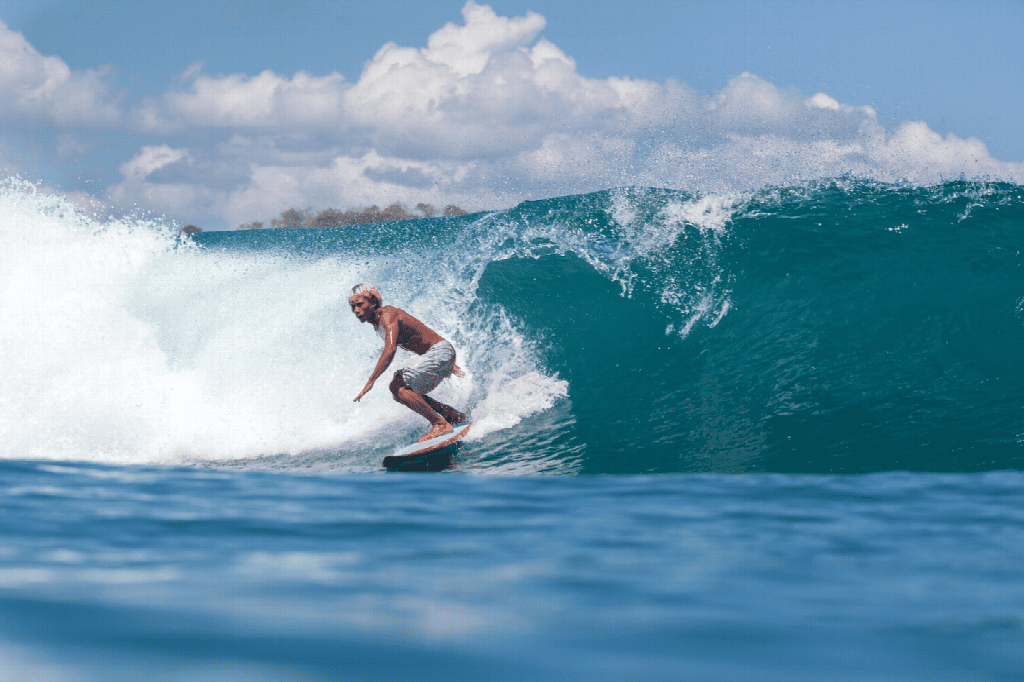
Ask a surfer about Indonesia and the answers tend to arrive in a predictable order: Bali, the Mentawais, maybe G Land. Sumbawa, the long island east of Lombok, usually turns up later in the conversation, often with a knowing grin. That is where Lakey Peak lives, and its reputation travels a lot faster than its road signs.
This guide covers what Lakey Peak actually is, how it compares with the breaks around it, when the swell tends to show up, and how to get there without losing a day to airport confusion. It also looks at what else a Sumbawa trip can include, from a family activity day on calmer water to a detour toward Komodo, because a surf trip rarely stays only a surf trip for long.
Getting to Know Lakey Peak
Lakey Peak is a reef break on the southeast coast of Sumbawa, in Dompu regency, close to the village of Hu'u. The name covers more than one wave. Surfers use it for the main peak and for the cluster of breaks around the same bay, all within walking or paddling range of each other.
The headline wave is an intense A frame that peels both ways. The left is usually the longer side and handles more swell, while the right is the shorter one. It is a reef break with real power, which is why regional guides class it as advanced surfing and not a casual learner's wave.
What the Trip to Lakey Peak Is Like?
Most trips start with a short hop from Bali or Lombok to Bima, the nearest airport (BMU). It is small and domestic only, so international arrivals connect through one of those islands. One regional guide puts the flight from Bali at about one hour and ten minutes and from Lombok at around forty five minutes, with fares from Bali typically between USD 50 and 150. Then comes the road. From Bima, the drive to Lakey Peak takes roughly two to three hours, usually by taxi at a fixed fare of about IDR 500,000 to 600,000, or by a pickup arranged through a guesthouse.
Boards are the part to sort early. Lion Air and Wings Air reportedly charge around IDR 200,000 per surfboard, while Garuda Indonesia is described as more surf friendly, so current policies are worth checking before booking. Overland via the Lombok ferry to Poto Tano is possible too, though it turns a short hop into a long day of travel.
Lakey Peak and Its Neighbours
Periscopes, a right hand reef wave about a mile up the beach, suits good intermediates and works well at high tide with light offshore wind. Nungas is a long left that can link into rides of 200 metres or more, suited to intermediates at around three to six feet. Lakey Pipe is a short, hollow barrel that often closes out and works better on a mid to high tide. The main peak sits at the top of the scale and asks for experience, fitness, and a calm head.
Currents at Nungas strengthen as the swell builds, so a word with local surfers first is worthwhile. The section drops from about 125 words to about 95, and the article stays well above 1,400 words. The facts are unchanged. I’ve only edited the text above, not the docx. Say the word and I’ll apply it and rebuild the file.
Choosing the Months
Sumbawa catches Indian Ocean swell mostly from April through October, with sizes that regional guides put anywhere between four and twelve feet. The dry season from May to August is the busiest stretch. Easterly trade winds are weaker in early summer, and morning sessions can be close to windless.
April, May, and October are described as early and late season options, and they are popular with regular visitors. The wet season, roughly November to March, brings smaller swell and quieter lineups, and one guide points to December as friendlier for intermediates. Reef breaks at full strength can be unforgiving, so reading the size before committing is part of the job.
Things to Consider For Your Safety
Reef is the main thing to look out for. Many breaks on the island of Sumbawa breaks sit over shallow coral, and dry season swell can arrive with real force, so size and tide deserve a look before every paddle out. A rash vest or short wetsuit protects against sun and scrapes, since water and air both hover around 28 degrees Celsius, and reef booties are a sensible extra.
A small first aid kit with antiseptic matters more than most visitors expect, because reef cuts are slow to heal in tropical heat. Surfers heading for the main peak often bring a performance shape with a little extra length for bigger days. Local advice about tides, currents, and etiquette is worth asking for on day one, and surf camps and guesthouses are usually the quickest source.
Things to Do Near Sumbawa
Sumbawa sits in the middle of some of Indonesia’s most popular destinations. Bali and Lombok make easy bookends for a surf trip, and Komodo lies just beyond Flores, so flat days and spare time never run short of options. Here are the things worth doing around the island:
Diving at Komodo Island Dive Sites
Strong currents push nutrient rich water between the islands, which feeds manta rays, large fish, and colourful reefs, and conditions change a lot from site to site. Surfers who spend their days reading swell and tide often get curious about what lies beneath, and a chat with legend diving is one way to find out which sites suit which experience levels before anyone gets in the water.
Learning to Dive on Flat Days
Flat days happen, even in peak season, and a few in a row make a handy excuse to learn something new. Surfers already understand tides and currents, so the move underwater tends to feel familiar, only quieter. A PADI Open Water course typically spans three to four days of theory, shallow water practice, and open water dives.
Age and health rules vary by operator, and many accept divers from around age ten on a junior pathway, which makes it a possible family activity. Common guidance suggests waiting at least 12 hours before flying after a single dive, and 18 hours or more after repeated or multi day diving, so the course belongs early in the trip.
Snorkelling at Pink Beach
Not everyone wants tanks. Pink Beach gets its blush from tiny red coral fragments mixed into the sand, and it is a popular snorkelling stop, with life jackets keeping weaker swimmers comfortable. Early morning and late afternoon light bring out the strongest colours.
Walking With the Dragons on Komodo Island
Komodo National Park is one of only a handful of places where the world’s largest living lizard lives in the wild. Walks are led by park rangers along set routes, and sightings depend on the day and the terrain. Closed shoes, a hat, and plenty of water cover most of what the walk demands. Fees and rules are set by the park authority, so current details are worth checking.
Taking in the View at Padar
Padar Island, often combined with Rinca and Pink Beach in one boat loop, is known for its hilltop viewpoint over curved bays. The climb is short but steep and sunny, so an early start keeps it comfortable.
Frequently Asked Questions
Is Lakey Peak suitable for beginners?
Not the main peak. It is a powerful reef break that regional guides class as advanced. Beginners and improvers are better served by gentler waves in Bali or Lombok, or by taking local advice about the milder spots around the bay.
How far is Lakey Peak from Bima airport?
Roughly two to three hours by road. One guide reports fixed taxi fares of about IDR 500,000 to 600,000, and pickups arranged through a guesthouse are also common.
Do airlines charge extra for surfboards?
Often, yes. Lion Air and Wings Air reportedly charge about IDR 200,000 per board on the Bali and Lombok routes. Policies change, so the airline's current rules matter more than any guide.
Are there direct flights from Sumbawa to Komodo?
No. Flights between Sumbawa Besar and Labuan Bajo connect once, through Lombok or Bali, for roughly two hours of flying before layover time. The ferry from Sape to Labuan Bajo is the overland alternative.
Wrapping Up
Lakey Peak rewards experienced surfers with a powerful reef wave and a handful of neighbours for every level, set on an island where lineups tend to stay smaller than Bali’s. Season, access, and reef safety shape the plan more than anything else.
Around it sits a long list of things to do: swimming and snorkelling on calm Sumbawa beaches, a family activity day or two, Bali’s cliffs, the Gili Islands off Lombok, mantas at Nusa Penida, and dragons and pink sand in Komodo. Even a first dive is within reach, and a beginner diving course in Komodo Island’s dive sites is one way to turn a flat spell into a new skill. Pick the swell window, check the flights, and leave room for the unplanned bits, which tend to become the stories later.