
Flat Days, Big Fun: Top Alternative Water Sports When Waves Disappear
The live cams show glass. The forecast says flat, flat, and more flat. Does the session have to end there? Not really. Alternative water sports keep you tied to the ocean, build skills that carry over once the swell returns, and turn dead time into something worth showing up for.
The Southern California coast throws plenty of good days your way. But it also serves up long stretches of near-glassy water that test the patience of even the most committed surfer. Fifteen-plus years of checking conditions from El Porto down through the South Bay will teach you that those quiet spells aren’t wasted time, just time spent differently. The ocean that refuses to give up waves still hands over wind, current, and open space.
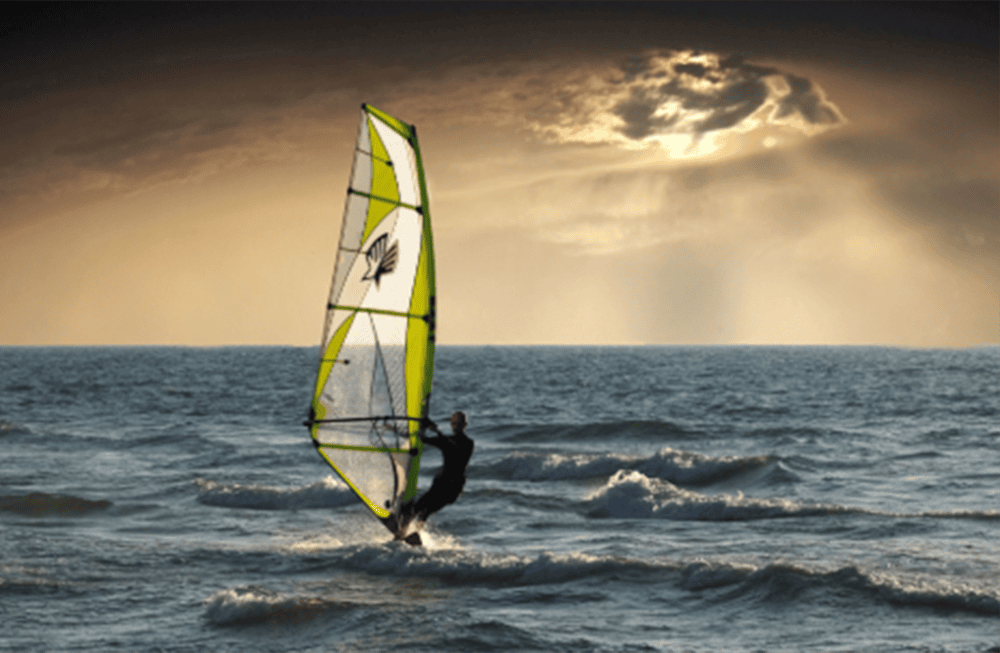
Windsurfing Turns Light Days Productive
Swell drops off, the afternoon sea breeze fills in, and the water looks like a different kind of playground. Surfers who already feel comfortable standing on a board tend to pick up windsurfing faster than expected.
Modern beginner windsurfing boards are built for that transition. Higher volume, wider shapes, more forgiving stability while you figure out the uphaul and fight the sail for balance. Many recreational models now come with deck padding and optional daggerboards, which helps on lighter wind days.
This isn’t a niche habit either. The Outdoor Industry Association’s June 2024 press release on its Outdoor Participation Trends Report showed outdoor participation climbing 4.1 percent in 2023, reaching a record 175.8 million Americans, or 57.3 percent of everyone aged six and up. Casual outings are becoming the norm. Light-wind afternoons, in that light, look less like lost surf time and more like an open invitation.
SUP Keeps You Moving on Calm Water
Stand-up paddling might be the most dependable fallback when the sets vanish. You cover real distance, notice small current shifts that usually go unnoticed, and still walk away with a full-body workout that feeds straight back into paddling strength.
The International Surfing Association has pointed to SUP as the fastest-growing water sport in the world for years now, and the reasoning holds up. It works on oceans, rivers, lakes, flat harbor water, wherever there’s a surface and a paddle.
The trend isn’t just a California thing. Reporting from The Guardian in August 2024 noted that roughly three million people in the United Kingdom tried paddleboarding at least once or twice during 2022, with club memberships climbing sharply as riders looked for calm-water alternatives.
That same appeal shows up locally, where a quiet morning on a SUP replaces the frustration of staring at a flat lineup with something productive instead. Inflatable boards have made this easier, since storage and transport stop being an issue for anyone already juggling other boards in the garage.
Foiling Unlocks Small-Energy Sessions
Hydrofoiling changes the entire equation on days that would otherwise feel like a write-off. A piece published in SURFER Magazine in December 2025 explained it well. Hydrofoils pull energy from the water itself rather than the wave face, so they don’t need big surf to build speed. They thrive in small, clean conditions, or even flat water with barely any wind. Wing foiling works on that same principle.
Once you’re up and riding, reduced drag lets you hold speed and cover distance in conditions that would leave a traditional shortboard dead in the water. For anyone who already reads local wind patterns well, foiling turns a marginal day into something that still delivers that floating, flying-across-the-surface feeling surfers chase in the first place. Not a replacement for the real thing, just a different kind of real thing.
Four Ways Alternatives Keep You Sharp
- Balance and proprioception stay dialed in, since every one of these sports demands constant micro-adjustments on an unstable surface.
- Core and shoulder endurance improve through the sustained paddling or sail-handling that flat-water sessions naturally require.
- Reading wind and current becomes second nature once those forces become your primary source of propulsion.
- Mental reset happens more easily once the pressure to score waves gets replaced by plain exploration.
There’s also a physical benefit worth noting. A Q&A published by the Mayo Clinic News Network in July 2025 explained that buoyancy at waist depth cuts effective body weight by roughly 50 percent, while water’s natural viscosity still creates enough resistance for a solid strength and cardio session, with far less strain on the joints than land training. Flat-day sessions aren’t only about staying busy. They’re doing real work for recovery and progression at the same time.
Participation Trends Favor Flexible Ocean Time
None of this runs counter to what regulars already sense on the ground. It just confirms it with numbers. A BBC feature from July 2024 cited data showing more than 53 million Americans, about 16 percent of the population, took part in water sports during 2023, a 1.3 percent increase from the year before, with paddle sports driving much of that growth.
Closer to home, tourism and recreation already account for 67 percent of marine-economy employment in California and 47 percent of its GDP, according to NOAA’s 2024 Marine Economy Report for the state. The infrastructure, gear shops, rental fleets, lesson programs, is already in place.
An earlier piece comparing windsurfing versus kitesurfing touched on this same idea. Windsurfing’s controlled falls and straightforward self-rescue options make it a practical pick when the swell disappears but the itch to be on the water hasn’t. None of this is about replacing surfing. It’s about keeping the connection alive and the body ready for when the waves come back.
Ready for the Next Quiet Stretch
Flat spells aren’t going anywhere. The cams and forecasts will keep delivering the occasional stretch of near-glass water, probably right when you had plans. But those days don’t have to feel like wasted opportunities anymore.
Whether the breeze picks up enough for a sail, the water sits calm enough for a long paddle, or there’s just enough energy for a foil session, the tools exist, and the participation numbers show plenty of people already reaching for them.
Check the live views early. Figure out which tool fits the conditions in front of you. Treat the quiet water as part of the rhythm rather than an interruption to it. The next solid swell feels a lot better when the body, and the ocean sense that come with it, stay sharp through the in-between days.