
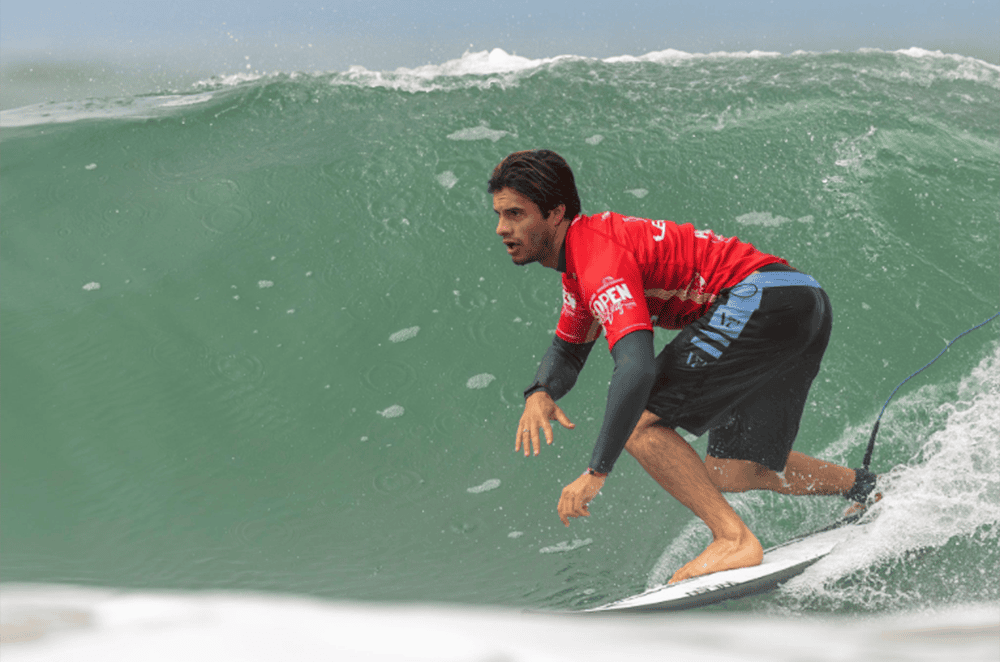
Height Comparison of Surfing’s Most Legendary Champions
Professional surfing mechanics require an exact alignment between skeletal biometrics and hydrodynamic pressure. Surf analysts frequently credit world title wins entirely to surfboard dimensions or heat strategy while overlooking the athlete’s vertical stature. Stature dictates rotational velocity and gravitational torque across shifting marine environments.
Elite competitors navigate strict physical parameters where millimeters of height alter rail engagement during critical bottom turns. Ocean mechanics punish structural inefficiencies regardless of prior heat scores or proprietary equipment sponsorships. Analyzing athlete biometrics reveals the hidden architectural framework governing decades of professional championship dominance across global surf breaks.
Are Taller Surfers Actually At A Disadvantage?
Conventional coaching dogma claims that taller surfers possess superior leverage for carving deep lines and executing expansive bottom turns. Seasoned trainers frequently repeat this premise, assuming that longer limbs generate wider arcs and greater momentum down the line. Reality contradicts this assumption entirely.
Compact Kinetic Efficiency: Compact athletes consistently dominate technical pocket surfing because rapid neuromuscular signaling translates faster through shorter skeletal levers.
Rotational Drag: Taller frames introduce rotational drag that impedes instantaneous directional changes required in waves exceeding 20 feet. This persistent myth maintains currency because observers mistake physical reach for functional torque.
Core Stabilization: Extended levers require exponentially greater core stabilization to prevent rail chatter during high-speed transitions. Shorter competitors maintain an advantageous center of gravity that minimizes energy leakage. Momentum favors efficiency over raw extension.
How Do Physical Traits Impact Wave Riding?
Hydrodynamic forces exert immense pressure on the human frame during high-speed maneuvers. Practitioners evaluate board volume constantly, yet physical posture dictates energy transfer efficiency. Stature modifies every single vector of board control. Center of mass position determines rotational stability.
Shorter limbs execute rapid compression, reducing wind resistance inside hollow barrel sections. Fluid dynamics punish excess height when riders lack core strength to stabilize extended frames against steep wave faces. Physics rejects personal ambition entirely.
How Do Wave Politics Shape Surfing?
Even when an athlete optimizes their biomechanics for speed and torque, the environment itself is subject to intense debate. According to Forbes, measuring waves over 60 feet is notoriously political and prone to human error, often overshadowing the technical mastery required by the rider.
While judges debate wave heights, athletes rely on their physical stature and gear. Because wave metrics remain inconsistent, analysts look past external scores to study hard biometrics, utilizing visual height comparison charts to evaluate how stature truly dictates a surfer’s center of mass and board control. Assessing this mechanical interplay remains vital for evaluating true performance, regardless of official records.
What Are The Physiological Profiles of 5 Legendary Champions?
Examining specific world champions highlights how varying heights produce distinct competitive advantages across diverse wave conditions. Professional careers spanning decades demonstrate that physical stature interacts uniquely with board design, determining how legends conquer monumental breaks.
Andy Irons
Reaching 6 feet 0.5 inches tall, this fierce competitor leveraged extra height for aggressive, vertical snaps. Extended reach generated radical vertical projections that challenged conventional limitations of taller frames on shortboards.
Kelly Slater
Standing at 5 feet 9 inches, this competitor secured 11 world titles by utilizing a balanced frame. Moderate height enables explosive rotational speed without sacrificing drive through heavy bottom turns.
Mark Occhilupo
Possessing a stocky, powerful build at 5 feet 9 inches, this powerhouse utilized immense lower-body torque. Broad shoulders and a lower center of gravity produced thunderous rail-to-rail carves in heavy reef breaks.
Mick Fanning
Measured at 5 feet 10 inches, this champion maximized speed through compact kinetic efficiency. Lightning-fast weight distribution transformed small sections into high-scoring opportunities through relentless rail engagement.
Stephanie Gilmore
Standing at 5 feet 10 inches, this multi-time title holder exemplified fluid style and precise positioning. Tall, elegant lines produced effortless glide across peeling point breaks without losing essential speed.
How Do Boards Offset Height Differences?
Shapers modify rocker curves and volume distributions to accommodate diverse athlete dimensions. Modern board design offsets height discrepancies through customized fin placements and adjustable rail foils. Taller champions require increased foam volume to prevent excessive sinkage during essential drops. Equipment tuning resolves physical imbalances.
Mastering material science helps shapers construct surfboards that harmonize with specific skeletal geometries. Custom engineering neutralizes physical disadvantages, allowing athletes of varying heights to achieve peak hydrodynamic performance. Design bridges human limitations.

How Does Center Of Mass Affect Torque?
Mass distribution relative to the rotational axis dictates rotational velocity directly. Surfing traditions evolved across 3000 years of human ocean interaction, refining the mechanics of board manipulation. Compact bodies complete rotations with minimal angular momentum penalty. Taller competitors offset extended limbs by engaging wider stances that lower their effective center of mass during vital maneuvers.
Biomechanical adjustments dictate competitive longevity. Athletes who manage their vertical constraints effectively extend their professional careers well past typical retirement ages. Physics demands absolute structural discipline.